Thursday, December 06, 2012
px_150_corn_field_tassel_rows_050629_012

Illinois: First Results from Soil Nitrogen Monitoring Project

AgFax.Com - Your Online Ag News Source


The first results from a project to sample soil this fall to see how the dry growing season and low corn yields affected nitrogen levels are now available, said University of Illinois crop sciences professor Emerson Nafziger.

One of the reasons for conducting the study was to see how much nitrogen is in the soil now to estimate the likely nitrogen loss over the winter and early spring.

“November was relatively dry in Illinois, and there have been few reports of tile lines running,” he said. “Now that soils have cooled down, the nitrogen, mostly in the form of nitrate, that is in fields most likely will stay in the soil until and unless tile lines run, when we can expect some of it to exit in tile drainage water.”

The second reason was to estimate how much nitrogen is available to next year’s crop, especially if corn is planted in the same fields.

“It’s typical for some loss to take place if we have normal precipitation from fall to early spring, but if this winter is dry, some of the nitrogen there now should be available for next year’s crop,” Nafziger explained. “We can’t know how much will be there in the spring without taking soil samples at that time, preferably close to planting.”

Many people volunteered to take samples. Participants were asked to take 0- to 1-foot and 1- to 2-foot samples at a single site. Site information, including how much nitrogen had been applied in 2012 and what the yield was, was sent with the samples, which were tested for both nitrate and ammonium. About 130 sites have been sampled to date in the U of I part of this project.

Nearly all of the samples were taken following corn in 2012, many from fields where 2012 yields were low due to dry weather. Previous sampling work, while not as comprehensive as this study, has typically shown nitrate-N levels of less than 10 ppm.

Although a large number of samples came from central Illinois, there was a good distribution from east to west. Average nitrate-N levels in the top foot of soil were 26, 16, and 18 ppm in northern, central, and southern Illinois, respectively, and ranged from near zero to 89 ppm. The 89 ppm sample, from a field in the northern part of the state with a reported yield of 175 bushels per acre, was the only one with a value above 50 ppm and is probably an outlier.

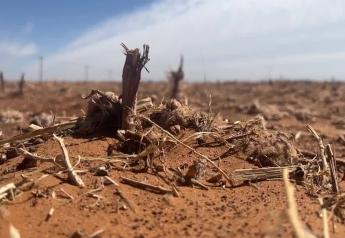
The data from the sampled fields reflect the dry growing conditions over much of the state in 2012. Some of the fields in southern Illinois yielded little or nothing, while several fields in central and northern Illinois yielded from 180 to 200 bushels per acre.

Average nitrate-N levels in the 12- to 24-inch samples were 16, 12, and 18 ppm in northern, central, and southern Illinois, respectively. These values are as high as those in the top foot of soil in southern Illinois and not much less than in the top foot in central Illinois.

The weighted average of nitrate-N in the top 2 feet of all fields sampled was 136 pounds of nitrogen per acre. Nafziger said that, while the sampled fields probably do not accurately represent all fields in Illinois, 12 million acres of corn with 136 pounds of nitrogen in the top 2 feet indicates that some 800,000 tons of “labile” (able to move and be taken up by plants) nitrogen are in Illinois fields now.

As expected when water limits yields, the amount of nitrogen used in a field did not seem to affect its corn yield. A few fields with very high nitrogen rates had low yields. The association between the amount of nitrogen applied and the amount present in the fall was, however, not strong. Low yields were not associated with high amounts of leftover nitrogen.

Finally, nitrogen removal in the grain was estimated by subtracting 0.75 pounds of nitrogen per bushel from the amount of nitrogen applied as fertilizer. The results were not helpful for predicting the amount of remaining nitrogen.

How can it be that the combination of low yields due to dry conditions and high application rates of nitrogen fertilizer seem unrelated to the amount of soil nitrogen found after the season?

“This shows how complex the nitrogen interactions are in the soil,” Nafziger said. “In a year such as 2012, there is little nitrogen loss, uptake ends early as the crop stops taking up water, and fall rainfall can produce new flushes of mineralized nitrogen long after crop uptake stops. We think that soil moisture was the main factor determining both yield and the amount of nitrogen in the soil and that these two factors had independent effects in the tough year that was 2012.”

Nafziger hopes that fields sampled this fall can be sampled in the spring of 2013 to see how much nitrogen remains. Where corn in 2013 will follow corn in 2012, nitrate-N present at planting should be available to the 2013 crop unless high loss conditions prevail after planting.

Tags: , ,


Leave a Reply

Name and Email Address are required fields. Your email will not be published or shared with third parties.

Sunbelt Ag News

    Rice Market: Southern Crop 4 Weeks Behind in Some Locations5-18

    Nebraska: Assess Condition of Alfalfa Fields at 1st Harvest5-18

    Grain TV: Soybean Contracts Rally While Cash Markets Fall5-17

    New Focus on Fertilizer Safety, Storage Regulations5-17

    DTN Livestock Close: Futures End Week with Sharp Losses5-17

    Florida: Perennial Peanut Producer’s Field Day, June 15-17

    Cleveland on Cotton: U.S. Plantings Mostly in Southwest, Drought Continues5-17

    Doane Cotton Close: No New News5-17

    Wheat Price Highlights: Nearby Contracts Down on Technical Selling5-17

    AFB Rice Close: Under Modest Pressure In a Light Trade5-17

    AFB Cotton Close: Ended The Day Higher5-17

    AgFax Rice Review: Why the Farm Bill Is Important; Tight U.S. Stocks Could See Prices Jump5-17

    AFB Grain-Soybean Close: Wheat Lower, Corn Mixed, Soybeans Higher5-17

    DTN Cotton Close: Posts Gains to Finish Week Nearly Flat5-17

    DTN Grain Close: Corn And Soybeans Push Higher5-17

    Farm Bill: Serious Debate Expected On The Floor5-17

    Corn Planting To Decrease And Soybean to Increase5-17

    Mississippi: Entire State Suffering Historic Planting Delays5-17

    AgFax Peanut Review: Prices Up; Georgia Peanut Commission Supports Farm Bill5-17

    Peanut Planting Gains Speed With Warmer Weather – AgFax5-17

    USDA: Peanut Price Highlights5-17

    DTN Livestock Midday:Futures Post Sharp Losses5-17

    DTN Grain Midday: Old Crop Corn And Beans Get Double-Digits5-17

    AgFax Cotton Review: Cotton Replant Costs; Environmental Use for Low-Grade Cotton5-17

    Energy: Domestic Ethanol Production Starts to Grow Again5-17

    Propane Inventories Increase5-17

    Gasoline Prices Climb 7 Cents5-17

    Diesel Prices Rise 2 Cents5-17

    DTN Cotton Open: Trades Slightly Mixed Near Unchanged5-17

    Texas: Plains Cotton Growers Produced 2.93M Upland Bales5-17

    DTN Livestock Open: Early Buying Interest to Support Lean Hog Futures5-17

    DTN Grain Open: Corn And Soybeans Higher, Wheat Low5-17

    Keith Good: The Fastest Farm Bill Moves To Senate Floor5-17

    Virginia: Early-Summer Row Crops Tour, Suffolk, June 65-17

    Rice Farmers Make Planting Push In Midsouth – AgFax5-16

    North Carolina: Grain Sorghum Shows Economic Advantage In Doublecrop Production5-16

    EPA Budget Examined Amid Calls for More Transparency5-16

    ELS Cotton Competitive Payment Rate 05-16

    Chumrau on Wheat: May WASDE Report Provides First Glimpse of New Marketing Year5-16

    Farming With Social Media – It’s Not a Choice5-16

    Rice Sales Increase, Exports Decrease5-16

    USDA Designates 6 Counties in Texas as Natural Disaster Areas5-16

    Farm Bill Update: More Changes to Commodity Programs5-16

    U.S. Drought Outlook: Improvement Slowly Spreads West5-16

    Southern Soybean Farmers Dealing With Crusting, Kudzu Bugs – AgFax5-16

    DTN Grain Close: Corn, Wheat Lower on Last Day of Planting Weather5-16

    Organic Food Industry Likely To Get Check Offs5-16

    Total Farm Safety Net Spending Drops By Two-Thirds as More Farmers Purchase Crop Insurance5-16

    House Farm Bill Advances That Could Cut Spending Up to $39.7 Billion5-16

    House Ag Committee Approves Farm Bill With Significant Savings & Reforms5-16

    Cotton Offers A New Ecologically Friendly Way To Clean Up Oil Spills5-16

    The Statistics of Late Planted Corn5-15

    Farm Bill: Senate Debate Next Week5-15

    Louisiana: Evangeline Parish Rice Tour, Herbert Farms, May 235-15

    University of Georgia Receives $15M Grant for International Peanut Research5-15

    Estate and Succession Planning: Keeping the Family Informed5-15

    Virginia: New Diesel Terminal Opening in Chesapeake5-15

    Nematode-Resistant Wheat Rotation Can Protect Tomatoes5-15

    Southwest Cotton Gets a Little Rain and Weeds Start Coming – AgFax5-15

    ‘Creative Arguments’ in Bowman v. Monsanto Says Ag Law Professor – Podcast5-14

    AgFax Grain Review: Drier Weather to Boost Planting; Double-Crop Soybean Acres Expected to Drop5-14

    Arkansas: Farmers Make Late Inning Rally After Rain Delays5-14

    Sunbelt Ag Events


    About Us

    AgFax.Com covers agricultural trends and production topics, with an emphasis on news about cotton, rice, peanuts, corn, soybeans, wheat and tree crops, including almonds, pecans, walnuts and pistachios.


    This site also serves as the on-line presence of electronic crop and pest reports published by AgFax Media LLC (formerly Looking South Communications).


    Click here to subscribe to our free reports.


    We provide early warnings and confirmations about pests, diseases and other factors that influence yield. Our goal is to quickly provide farmers and crop advisors with information needed to make better and more profitable decisions.


    Our free weekly crop and pest advisories include:

    • AgFax Midsouth Cotton, covering cotton production and news in Alabama, Arkansas, Louisiana, Mississippi, Tennessee and Missouri.

    • AgFax Southeast Cotton, covering cotton production and news in Alabama, Florida, Georgia, North Carolina, South Carolina and Virginia.

    • AgFax Southwest Cotton (new for 2013!), covering cotton production and news in Texas, Oklahoma, Kansas and New Mexico.

    • AgFax West (formerly MiteFax: SJV Cotton), covering California cotton, alfalfa, tomatoes and other non-permanent crops in California's Central Valley.

    • AgFax Rice covering rice production and news in Arkansas, Louisiana, Mississippi, Missouri and Texas.

    • AgFax Peanuts, covering peanut production in Alabama, Arkansas, Florida, Georgia, Louisiana, Mississippi, North Carolina, South Carolina, Texas and Virginia.

    • AgFax Southern Grain: covering soybeans, corn, milo and small grains in Southern states.

    • AgFax Almonds, covering almonds, pistachios, walnuts and other tree crops in California's Central Valley.

    • AgCom 101, providing guidance to ag professionals involved in social media.

    Our newsletters are sponsored by the following companies: FMC Corporation Chemtura Dow AgroSciences.


    Mission statement:

    Make it as easy as possible for our community of readers to find and/or receive needed information.


    Contact Information:

    AgFax Media. LLC

    142 Westlake Drive Brandon, MS 39047

    601-992-9488 Office 601-992-3503 Fax

    Owen Taylor Debra L. Ferguson Laurie Courtney


    Circulation Questions?

    Contact Laurie Courtney